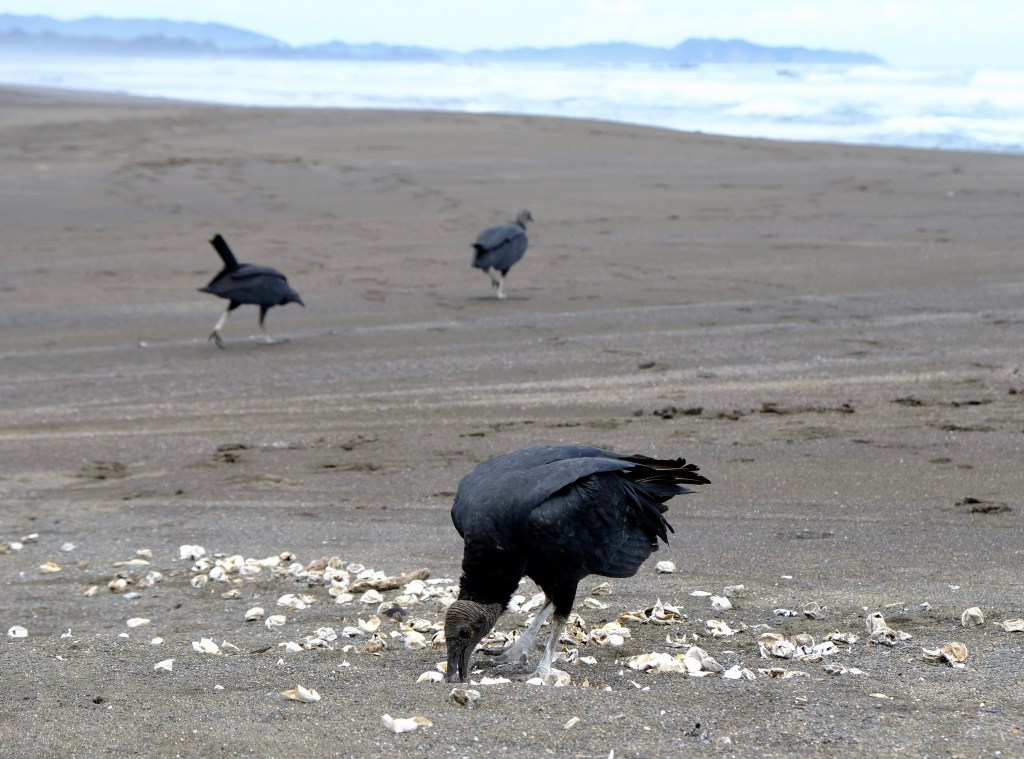
While predation is a natural part of the food chain, the balance in this cycle can be disrupted by human activities. For example, litter on the beach can attract raccoons, coyotes, dogs, wild boars, foxes and non-native species, consequently leading them to turtle nests and hatchlings in which they prey upon. This endangers the reproductive success of sea turtles. And due to anthropogenic coastal developments, predators such as raccoons and coyotes no longer have their own natural predators. They also adapt very well to living around humans and are often intentionally or unintentionally fed resulting in higher populations of nest predators, and ultimately, higher sea turtle nest and hatchling predation rates.
Predators such as dogs and wild boars have been reported to also attack nesting females. While adult sea turtles are very agile in the oceanic environment, they are vulnerable on land as they are slow and clumsy, and are unable to retrack their head and limbs into their shell.
Natural predation of most sea turtles usually occur during their hatchling years due to their small size and limited swimming speed. Natural predators of eggs include fire ants, lizards and snakes while natural predators of hatchlings making their way from the nest to the ocean include crabs and sea birds. Synchronised, mass hatching is a strategy to avoid predators at this stage. Once in the ocean, hatchlings face the threat of carnivorous fish, sharks, whales and sea birds during their developmental years. Approximately, only 10% of hatchlings reach adulthood.
As sea turtles grow, they face fewer natural predators due to their increased size and hard shells. The main natural predators of older juvenile and adult sea turtles are killer whales and large sharks, such as Tiger Sharks. In some regions, saltwater crocodiles and jaguars have been recorded to prey on nesting females.
Some studies looking at sea turtle diving behaviour recorded that a slow approach to the surface to breathe, using a passive ascent under positive buoyancy, allows turtles to scan the habitat for predators before surfacing. When under attack, sea turtles have been observed turning their shells to face the predator’s mouth, such as a shark, to avoid having their soft tissue bitten and subsequently swimming fast in the opposite direction.
Summary
- Beach litter can attract raccoons, coyotes, dogs, wild boars, foxes and non-native species, consequently leading them to turtle nests and hatchlings in which they prey upon.
- Anthropogenic coastal developments have resulted in predators such as raccoons and coyotes to no longer have their own natural predators.
- These predators also adapt very well to living around humans and are often fed resulting in higher populations.
- Predators such as dogs and wild boars have been reported to attack nesting females.
Solution
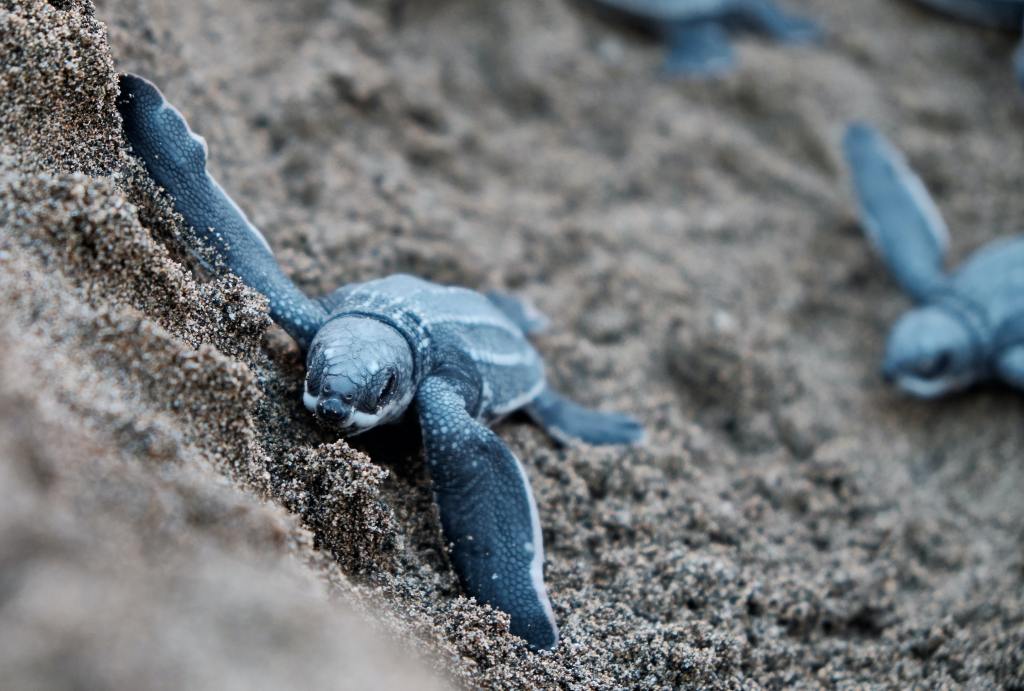
Avoid attracting predators to the beach by not feeding wildlife. Fed animals typically return to the same areas where they have been fed in search of more food. Ensure no rubbish is left at the beach and secure rubbish outside of your home, especially rubbish bins containing food or organic waste.
When near the beach, keep dogs leashed or fenced and supervised at all times. Support spay and neuter programs near coastal areas to decrease stray mammal populations.
A longer term solution would be to humanely remove all non-native animals through humanely set traps, spay and neuter, and deportation. While many communities resort to killing non-native species, it is important to remember that these non-native animals are still innocent lives and that it is not their fault that they ended up where they are. After all, it is humans that introduced these species. If we brought them here, we should take them back and not punish another species for our own negligence.
If predation of turtles, nests and/or hatchlings is witnessed at a beach, call the relevant local authorities and, if safe, lure the predators away. It is important that the relevant local authorities are notified so the incident can be recorded and the problem mitigated to ensure sea turtles, their eggs and hatchlings are safe.
Summary
- Don’t feed wildlife.
- Ensure no rubbish is left at the beach and secure rubbish outside of your home, especially rubbish bins containing food or organic waste.
- Keep dogs leashed or fenced and supervised at all times when near the beach.
- Support spay and neuter programmes.
- Humanely remove all non-native animals through humanely set traps, spay and neuter, and deportation.
- Call the relevant authorities if predation of turtles, nests and/or hatchlings is witnessed at a beach, and, if safe, lure the predators away.
References
Butler, Z. P., Wenger, S. J., Pfaller, J. B. et al. Predation of Loggerhead Sea Turtle Eggs Across Georgia’s Barrier Islands. Global Ecology and Conservation 23 (2020).
Heithaus, M. R., Wirsing, A. J., Thomson, J. A., & Burkholder, D. A. A Review of Lethal and Non-Lethal Effects of Predators on Adult Marine Turtles. Journal of Experimental Marine Biology and Ecology 356(1-2), 43-51 (2008).
Lei, J. & Booth, D. T. Who are the Important Predators of Sea Turtle Nests at Wreck Rock Beach? PeerJ (2017).
López-Mendilaharsu, M., Giffoni, B. B., Monteiro, D. et al. Multiple Threats Analysis for Loggerhead Sea Turtles in the Southwest Atlantic Ocean. Endangered Species Research 41, 183-196 (2020).
Lovemore, T. E. J., Montero, N., Ceriani, S. A. & Fuentes, M. M. P. B. Assessing the Effectiveness of Different Sea Turtle Nest Protection Strategies Against Coyotes. Journal of Experimental Marine Biology and Ecology 533 (2020).
Martins, S., Sierra, L., Rodrigues, E. et al. Ecological Drivers of the High Predation of Sea Turtle Hatchlings During Emergence. Marine Ecology Progress Series 668, 97-106 (2021).
Olive Ridley Project: How do Sea Turtles Avoid Predators?
Sea Turtle Conservancy: Threats from Predation
SeaTurtle-World: Sea Turtle Predators
ThoughtCo.: Sea Turtle Predators
ThoughtCo.: What Eats Sea Turtles?
 Koru Honu