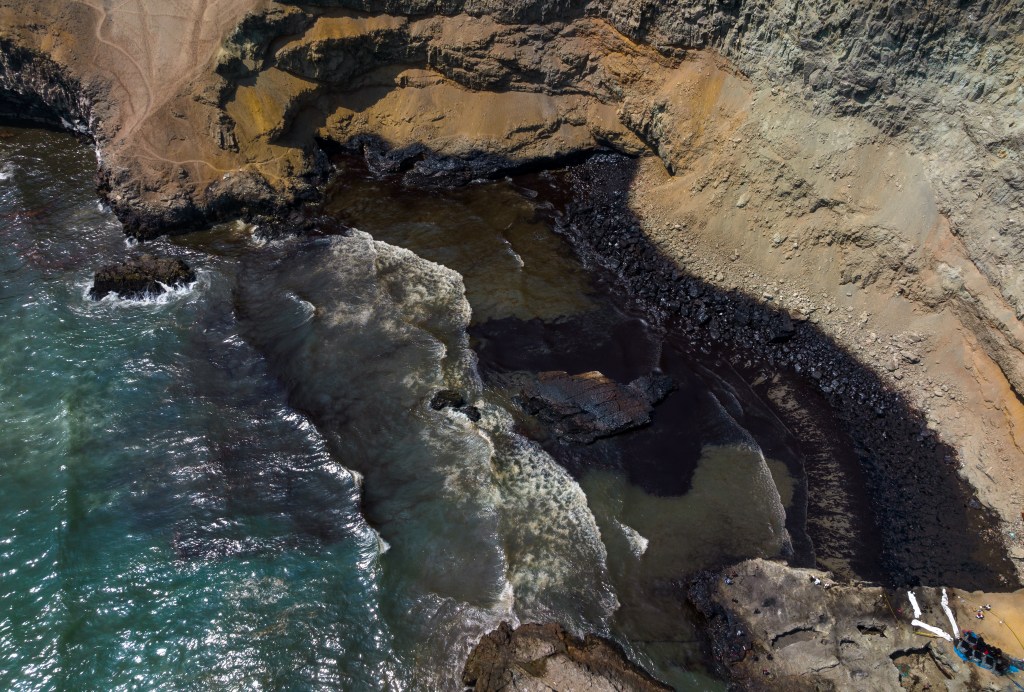
Oil spills from exploration for and transportation of oil and gas, as well as from urban and agricultural run-off, are devastating for all marine and coastal life, habitats and ecosystems, including that of sea turtles. As sea turtles migrate long distances and inhabit so many different parts of the ocean environment around the world at different stages of their lives, oil spills have a very high potential of being carried by ocean currents and winds into the paths and habitats of sea turtles of all ages.
Although sea turtles can hold their breath for extended periods of time, they are air-breathing reptiles and come to the surface to breathe regularly. Since most oils float, when a sea turtle comes up for air into an oil slick, they end up being covered in oil, inhaling the oil and its vapours, swallowing the oil, and getting it into their eyes. The same occurs with oil drifting through the water column and sitting on the sea bed.
The situation can be even worse for very young sea turtles living among floating sargassum (brown seaweed with berry-like air bladders) patches, as these small turtles almost never leave the top few centimetres of water, increasing their exposure to a floating oil slick. Furthermore, ocean currents and winds often bring oil to the same oceanic convergence zones that bring sargassum and young sea turtles together.
The impact of oil ingestion have both serious long- and short-term consequences on sea turtles. Because sea turtles can hold their breath for long periods, this increases their chances of oil and oil vapours being absorbed into their bodies. Furthermore, the throats of sea turtles are lined with pointy spines called esophageal papillae which helps keep swallowed food inside while expelling water. These spines, however, also trap thick oil in the turtles’ throats and affects their ability to absorb or digest foods. Rescued turtles taken to rehabilitation centres have been recorded to have oil in their faeces.
Oil contains a class of toxic chemicals known as Polycyclic Aromatic Hydrocarbons (PAHs) which can have detrimental effects on the health of sea turtles, including bleeding and anaemia, the development of ulcers, inflammation of the gastrointestinal system, problems with digestion, damage to internal organs, and damage to the immune and reproductive systems, potentially leading to death. These complications can impede their breathing and heart function which can make migrating, diving, feeding, mating and escaping from predators more difficult. A study on Loggerhead Sea Turtles found that they would often mistaken floating tar balls for food leading to toxic exposure, large esophageal swelling, and ‘floating syndrome’ where gas prevents turtles from diving to feed which can lead to starvation.
Externally, oil irritates and burns the sensitive membrane mucus around the eyes, mouth, lungs and digestive tract of sea turtles. Contact with oil in these areas, as well as the skin, can also result in infection. Oil exposure for just four days can cause sea turtles’ skin to continually fall off in sheets, even after they are removed and treated from the exposure. Fumes may result in irritation of the turtle’s eyes or mouth, irritation to the respiratory system, injured tissues or pneumonia.
The weight of the added coat of oil on sea turtles can put them at risk of exhaustion when undertaking their usual activities such as migrating, diving, feeding, mating and escaping from predators. Furthermore, turtles coated in dark oil under a hot summer sun can heat up to dangerous temperatures, further deteriorating their health and possibly even killing them.
Oil also contaminates the food that sea turtles eat including jellyfish, crustaceans, fish, sea grass and algae, thus entering their system and even being passed through the food chain. The contamination further kills these food sources, resulting in reduced food availability for sea turtles. In addition, if oil kills the sargassum where young sea turtles live, they lose their shelter and food source, and are forced to find suitable habitat elsewhere, using more energy and makes them more vulnerable to predators.
Oil on the beaches can cause females to abort their nesting attemps and also acquire direct injury from exposure to oil causing skin irritation, chemical burns and infections. Female sea turtles that have ingested oil can pass oil compounds to their offspring through their eggs. Eggs laid on an oil contaminated beach can also absorb oil components from the sand, potentially damaging, deforming or killing the baby turtle developing inside. There is a significant decrease in hatchling survival if eggs are exposed to fresh oil in the last half or last quarter of the incubation period. Oil could also prevent oxygen from getting through the sand to the eggs and could change the nest incubation temperature (resulting in altered and unnatural sex ratios or even complete nest failure). Viscous, weathered oil on beaches is an additional obstacle hatchlings must overcome to reach the water safely before they are found by predators. Direct exposure also causes the same injuries as that of older sea turtles.
Although spill responses and clean-up operations are important in oil spill events, these can also harm sea turtles unintentionally such as being struck by response vessels or as a result of oil burning (which can kill or injure sea turtles through direct burns or breathing in toxic fumes) and skimming activities. Furthermore, the additional lighting (see Light Pollution) and beach activities during rescue and clean-up operations can disrupt nesting females, incubating nests and newly hatched hatchlings navigating their way to the water.
Summary
- Oil spills are a result of exploration for and transportation of oil and gas, as well as from urban and agricultural run-off.
- When a sea turtle comes up for air into an oil slick, they end up being covered in oil, inhaling the oil and its vapours, swallowing the oil, and getting it into their eyes.
- Ocean currents and winds often bring oil to the same oceanic convergence zones that bring sargassum and young sea turtles together, which can harm the young turtles in addition to killing the sargassum in which the turtles rely on for food and shelter.
- The throats of sea turtles are lined with pointy spines called esophageal papillae which helps keep swallowed food inside while expelling water. These spines, however, also trap thick oil in the turtles’ throats.
- Oil contains a class of toxic chemicals known as Polycyclic Aromatic Hydrocarbons (PAHs) which can effect the health of sea turtles, including bleeding and anaemia, development of ulcers, inflammation of the gastrointestinal system, problems with digestion, damage to internal organs, and damage to the immune and reproductive systems, potentially leading to death.
- These complications can impede their breathing and heart function which can make migrating, diving, feeding, mating and escaping from predators more difficult.
- A study on Loggerhead Sea Turtles found that they would often mistaken floating tar balls for food leading to toxic exposure, large esophageal swelling, and ‘floating syndrome’ where gas prevents turtles from diving to feed which can lead to starvation.
- Oil irritates and burns the sensitive membrane mucus around the eyes, mouth, lungs and digestive tract of sea turtles, which can result in infection.
- Exposure to skin can cause skin to continually fall off in sheets, even after they are cleaned and treated.
- Fumes may result in irritation of the turtle’s eyes or mouth, irritation to the respiratory system, injured tissues or pneumonia.
- The weight of the oil coat on sea turtles can put them at risk of exhaustion when undertaking their usual activities such as migrating, diving, feeding, mating and escaping from predators.
- Turtles coated in dark oil under a hot summer sun can heat up to dangerous temperatures, potentially killing them.
- Oil contaminates the food availability for sea turtles, thus threatening marine ecosystems.
- Oil on beaches can cause females to abort their nesting attemps and also acquire direct injury from exposure.
- Female sea turtles that have ingested oil can pass oil compounds to their offspring through their eggs.
- Eggs laid on an oil contaminated beach can absorb oil components from the sand, potentially damaging, deforming or killing the baby turtle developing inside.
- Oil can prevent oxygen from getting through the sand to the eggs.
- Oil can change the nest incubation temperature, resulting in altered and unnatural sex ratios or even complete nest failure.
- Viscous, weathered oil on beaches is an additional obstacle hatchlings must overcome to reach the water safely.
- Spill responses and clean-up operations can harm sea turtles unintentionally though vessel collisions or as a result of oil burning and skimming activities.
- Lighting (see Light Pollution) and beach activities during rescue and clean-up operations can disrupt nesting females, incubating nests and newly hatched hatchlings navigating their way to the water.
Case Study: BP Deepwater Horizon Oil Spill (2010)
On 20th April 2010, an explosion (and subsequent sinking two days after) at the BP Deepwater Horizon oil rig released over 200 million gallons of crude oil into the Gulf of Mexico (Figure 1) over the course of 87 days. The explosion killed 11 rig workers and millions of wildlife including marine mammals, sea turtles, birds, fish, crustaceans and corals. It was the biggest oil spill ever and remains one of the worst environmental disasters in world history.
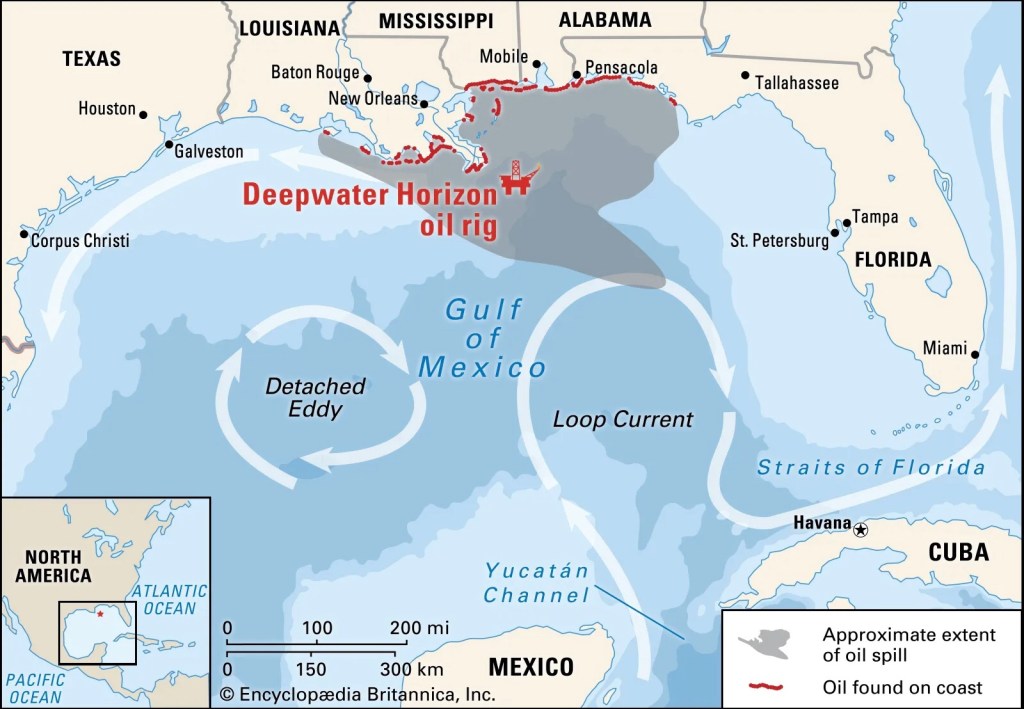
The Deepwater Horizon oil rig was owned and operated by offshore-oil-drilling company Transocean and leased by oil company BP. The rig was situated in the Macondo oil prospect in the Mississippi Canyon, a valley in the continental shelf, 66 kilometres off the coast of Louisiana. The Deepwater Horizon well was drilled in 2009 and at that time, it was the deepest well ever drilled, punching over 10.5 kilometres down into the ground below the sea, in water over 1.5 kilometres deep.
The explosion was caused when a pulse of gas shot up as a crew member worked to close up an exploratory oil well deep under the Gulf, buckling the drill pipe. The emergency valve designed to cap the well in case of an accident, the ‘blow out protector’, failed. This resulted in the gas reaching the drill rig, triggering the explosion.
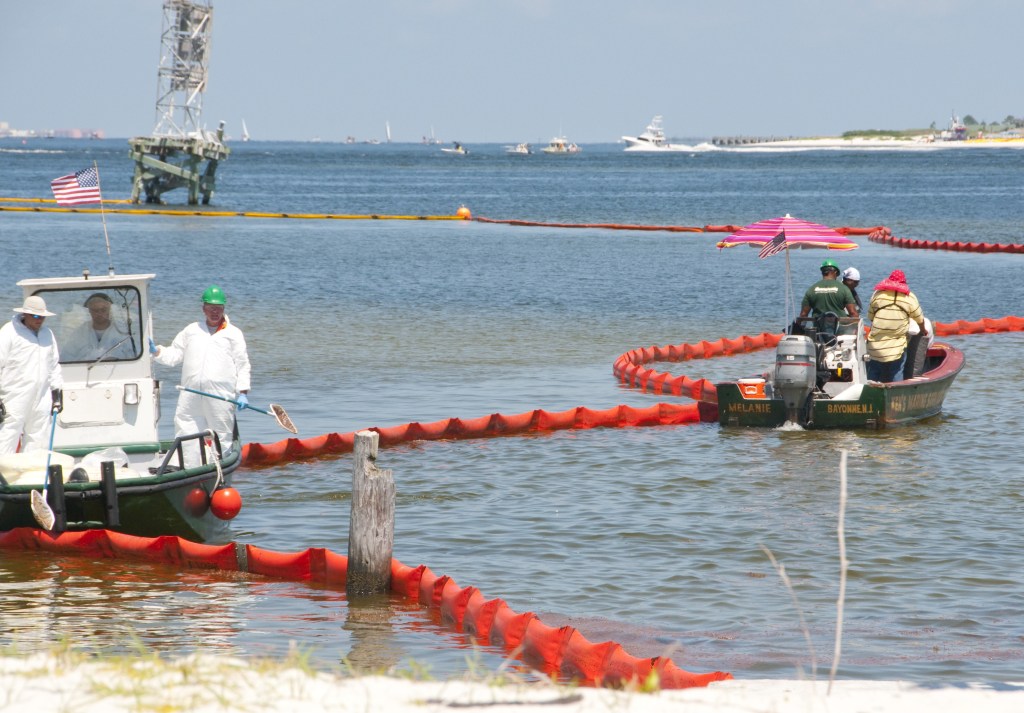
The petroleum that had leaked from the well before it was finally capped on 15th July 2010 (87 days after the explosion) formed a slick extending over more than 149,000 square kilometres off the Gulf of Mexico. Immediate efforts to clean up the oil spill included releasing 1.8 million gallons of dispersants directly into the leak and aerially onto the slick to emulsify the oil, thus allowing for easier metabolism by bacteria. Booms to confine portions of the slick were deployed, and the contained oil was then siphoned off or burnt. Oil and tar balls that had contaminated the beaches of Louisiana, and later on Mississippi, Alabama and Florida were manually removed. Marshes and estuaries were more difficult to clean due to delicate plant life that existed in these areas. The various cleanup efforts were coordinated by the National Response Team, a group of government agencies headed by the US Coast Guard and the Environmental Protection Agency (EPA). Coast Guard cleanup patrols ultimately drew to a close in Alabama, Florida and Mississippi in June 2013, and in Louisiana in April 2014.
Animals that were found alive in the wake of the spill were transported to rehabilitation centres and, after being cleaned and medically evaluated, were released into oil-free areas. Eggs from 275 sea turtle nests were dug up from the beaches of Alabama and Florida and relocated to the Atlantic Coast where 14,000 hatchlings, mostly Loggerheads, were later released. By late 2012, around 1,700 sea turtles had been found dead though it is estimated that 4,900-7,600 large juvenile and adult sea turtles, 56,000-166,000 small juvenile sea turtles and a further 35,000 hatchlings were killed by the spill. Based on satellite tracking data, the endangered Kemp’s Ridley Sea Turtle was likely the most severely affected as its preferred foraging ground was within the area damaged by the spill. Thus the once remarkable recovery of the Kemp’s Ridley Sea Turtle halted abruptly. In a 2016 study, Kemp’s Ridley females struggled to maintain the weight and health necessary to reproduce. Around 300,000 sea turtles are estimated to have been within the region of the spill when it happened, and due to the migratory nature of sea turtles, some of these turtles originated from breeding populations in other parts of the world, thus demonstrating the global scale of this disaster.
A spike in the deaths of other marine animals was observed as a result of the immediate impacts of the spill. While this spike in deaths eventually tapered, the spill had long-term health consequences including weakened immune systems and declined fertility. A 2013 study of living dolphins in Barataria Bay, Louisiana, found that roughly half were extremely sick; many suffered from lung and adrenal disorders known to be linked to oil exposure. There was also an unusual occurrence of Brucella infection in stranded dolphins, leading researchers to suspect that contaminants from the spill had made cetaceans more vulnerable to other environmental dangers. This led to a continued increased mortality and it is estimated that 51% of the Bottlenose Dolphin population has been lost in the 10 years following the oil spill. Substantial decreases in dolphin fertility also persisted with about 20% of pregnancies among the dolphins in Barataria Bay being successful, compared to 83% in unoiled regions.
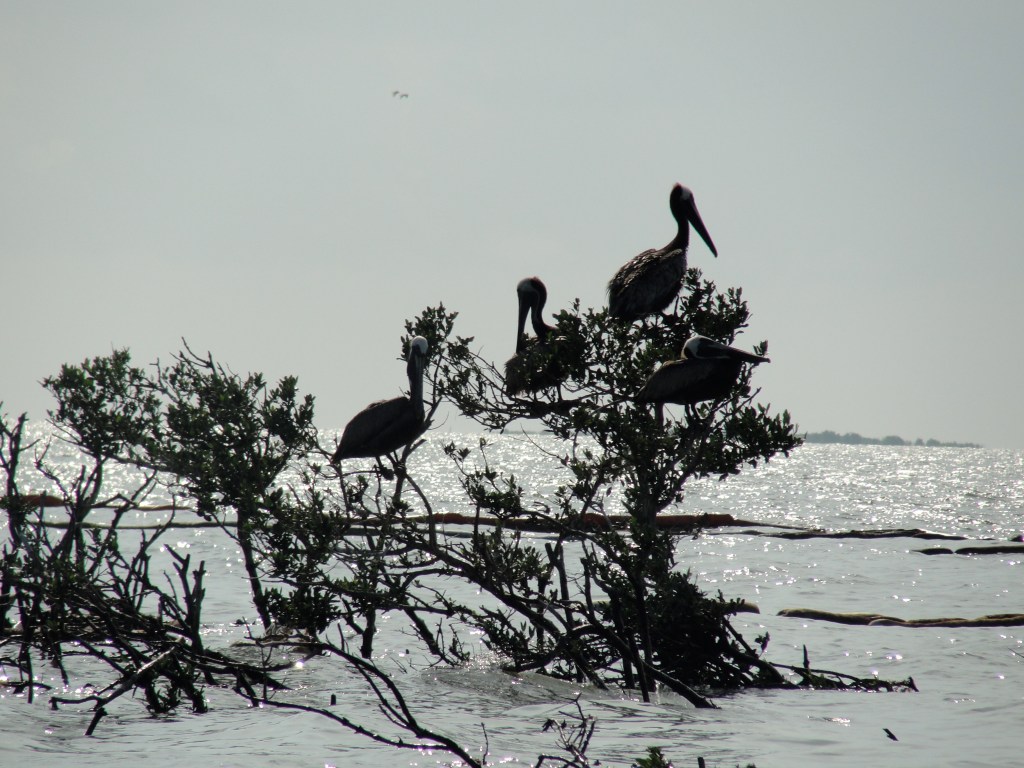
Of the birds, up to 800,000 were thought to have died through ingestion as they tried to clean themselves or because the substance interfered with their ability to regulate their body temperatures. The Brown Pelicans and Laughing Gulls were most affected with 12 percent of Brown Pelicans and more than 30 percent of Laughing Gulls in the region estimated to have been wiped out. Those that survived the initial spill later suffered health problems including oil-related cancers, anaemia and reproductive issues. A 2012 study found that White Pelicans that had migrated from the Gulf to Minnesota to breed were producing eggs that contained discernible amounts of compounds that were traceable to the BP spill. Oil contaminated eggs were also found in Illinois and Iowa. But while bird populations were one of the most devastated in the wake of the spill, they have also shown some of the strongest recovery.
While the oil spill resulted in declined reproduction in fish species, fish numbers (particularly among the Gulf Menhaden) exploded due to the reduced number of birds and other predators in the region. Deformities were reported in a 2014 study showing that the larvae of fish species likely developed heart defects after exposure to Polycyclic Aromatic Hydrocarbons (PAHs) from the oil and research shows that the effects are still widespread and ongoing as of 2020. Initially, fish within the disaster area developed skin lesions, though this has declined over time. While the number of oil contaminated fish have also declined, fish in the area continue to have some degree of oil pollution.
Coral reefs within the region of the oil spill were 10 times more stressed and injured than before the spill and their condition continued to deteriorate in the following years after the spill. Laboratory studies suggested that oil and dispersants made coral reproduction more difficult. Coral larvae, which are initially mobile, attached to mature corals at much reduced rates following exposure to the substances. Tests also determined that oil and dispersants were fatal to rotifers, microorganisms crucial to the Gulf food web. It was also determined that oil-eating microbes were negatively affected by blooms of other species of microbes that preferred to feed on the dispersants. While oil-eating microbes help disperse and breakdown the oil, they only work where they can breathe. Once oil becomes buried in oxygen-poor sediments, microbial action can be very slow to non-existent.
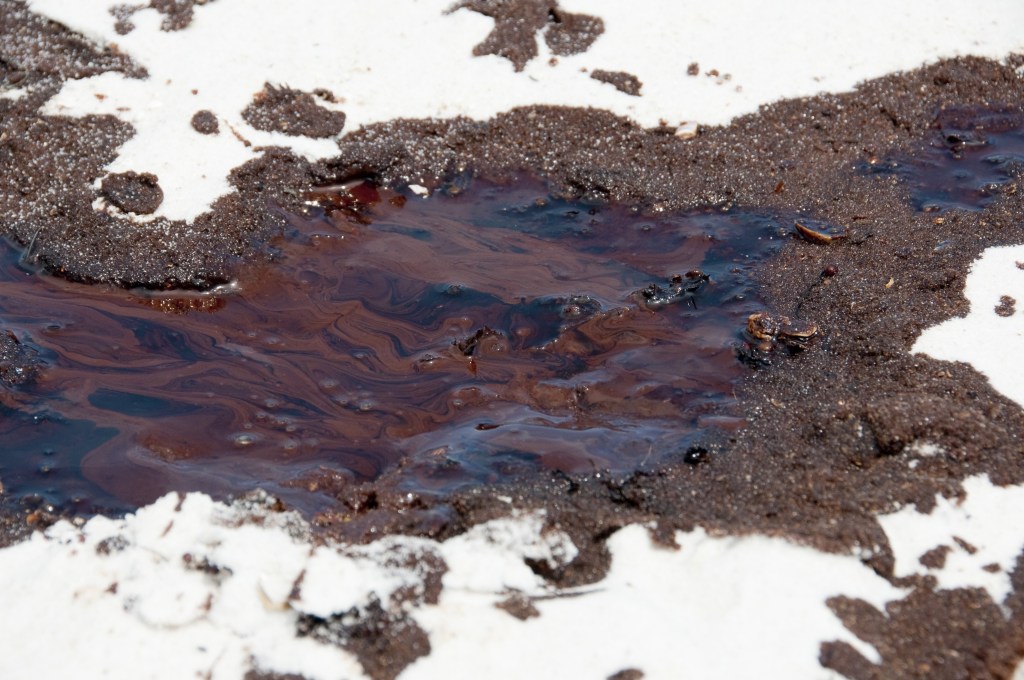
Immediately after the spill, the 2,100 kilometres of contaminated coasts saw oil concentrations 100 times higher than background levels. Even eight years later, concentrations were still 10 times higher than before the spill. Marshes edges are taking the longest to recover and erosion rates have accelerated in these areas due to the die-off of grasses that became heavily coated in oil, preventing photosynthesis. Inland marshes that experienced oil damage but were not susceptible to erosion made a full recovery after 1.5 years due to lateral plant regrowth from healthy areas.
Researchers believe that about 10% of the oil released found its way to the bottom of the ocean. Oil droplets attached itself to aggregates and planktonic particles which created dense particles that sank below the surface, known as marine snow. This caused the oil to also sink. The aggregates likely formed from sea snot released by phytoplanktons under stress which adhered algae, faeces, clay and oil particles together (clay easily and densely sticks to oil). This was exacerbated by the release of dispersants through clean-up efforts which created smaller oil particles that lump together, and the burning of oil which released PAHs that adhere easily to sea snot. Oil continued to sink for more than a year after the incident, choking life on the sea floor of oxygen. However, on a 2014 mission conducted by the research group Ecosystem Impacts of Oil and Gas Inputs to the Gulf (ECOGIG), some ecological recovery of the seafloor was noted though detectable oil levels in sediment cores remained unchanged. Fortunately, the oil spill remained limited to the Gulf due to an anomaly in the offshore ‘loop current’ that prevented oil-tainted Gulf waters from moving up the US East Coast.
Not only did dispersants unintentionally exacerbate the impact of the oil spill in some ways, some clean-up efforts may have also unintentionally harmed sea turtles and other marine animals. Oil-containing booms and controlled burns may have entrapped turtles and other larger animals, increased vessel traffic likely contributed to a number of turtles and cetaceans struck and killed, and exposure to dispersants may have impacted their health.
Weeks after the disaster, BP announced a US$500 million fund, distributed over 10 years across institutions by the independent Gulf of Mexico Research Initiative (GoMRI) to help scientists and communities understand the immediate and long-term impacts the Deepwater Horizon oil spill has had on marine life and coastal environments.
As a result of the spill, numerous lawsuits were filed against BP, Transocean, Halliburton, Anadarko, as well as associated individuals. Lawsuits included violation of the Clean Water Act, Oil Pollution Act and Migratory Bird Treaty, manslaughter and destruction of evidence. The National Commission on the BP Deepwater Horizon Oil Spill and Offshore Drilling in their final report issued in January 2011 attributed the spill to a lack of regulatory oversight by the government, and negligence on the part of BP and its partners. In 2020, 10 years after the disaster, the former members of the National Commission noted that the Congress had failed to act on most of the recommendations in the final report, including:
- Inspection of the blow out protector by a third party.
- Legislation to protect whistle blowers of health and safety violations.
- Permanently securing the safety bureau as independent from oil production agencies.
- Oil and gas industry to fund environmental science and regulatory review.
One major piece of legislation Congress passed was the Restore Act in which 80% of Clean Water Act fines from the Deepwater Horizon oil spill were directed towards coastal restoration which has greatly helped the restoration of coastal ecosystems. However, as the demand for and production of oil continues to increase, drilling has expanded further offshore and deeper underwater which has resulted in weakened environmental and safety legislations, and the threat of climate change increases the risk of another catastrophe through extreme weather events.
Solution
The first and foremost solution to oil spills is prevention, thus the cessation of offshore drilling and the use of fossil fuels. Oil is finite and we will run out of it eventually. Humans can live without oil, especially now that renewable alternatives are available. We survived without it in the past. We have become so reliant on materials and convenience that we have forgotten what life was like when less was more. A combination of renewable energy forms as well as reduced consumption and increased awareness of our energy footprint through all forms of consumption means that the use of fossil fuels and offshore drilling can cease imminently. Relearning to enjoy the simple things in life without constant connection to all things digital will also reduce our reliance on fossil fuels and other forms of energy. Our life satisfaction and happiness will also greatly increase.
Where there is demand, there is supply. Ways the public can get involved in reducing energy demand is by buying organically and locally produced foods and products; and using more public transportation (where demand for public transportation increases, so does frequency and quality) and active forms of travel such as cycling, walking and running. Also ensure all electricity is turned off when not in use. These actions cumulatively help reduce energy demands, particularly for fossil fuels.
Local and international authorities need to strictly ensure that local codes enforcing fertiliser bans near waterways are followed, and that untreated waste water isn’t introduced to natural waterways, as oil can originate from these sources.
The increase in renewable energy also leads to the creation of jobs in energy conservation and renewables which will help swiftly shift the economy to more circular and cleaner, without reliance on fossil fuels.
Education about the impacts our reliance on fossil fuels and offshore drilling have on sea turtles, other marine wildlife and their ecosystems, and why marine ecosystems are important, is vital to ensuring people reduce and change their consumption habits and consciously buy products that are energy efficient (e.g. Energy-Star qualified, energy efficient fluorescent bulbs) and not derived from fossil fuels.
The amount of energy we use is also highly dependent on human population. As human population eventually declines, the demand for energy decreases and can be more easily managed, and will be much easier and quicker to switch from fossil fuels to 100% renewable energy, thus eliminating the risk of oil spills.
Summary
- Cessation of offshore drilling and extraction of fossil fuels must be imminent.
- Buy organically and locally produced foods and products.
- Use more public transportation (where demand for public transportation increases, so does frequency and quality) and active forms of travel such as cycling, walking and running.
- Ensure all electricity is turned off when not in use.
- Local and international fertiliser bans near waterways need to be strictly enforced, and that untreated waste water isn’t introduced or dumped into natural waterways.
- An increase in renewable energy leads to the creation of jobs in energy conservation and renewables which will help swiftly shift the economy away from fossil fuels.
- Educate the public about the impacts our reliance on fossil fuels and offshore drilling have on sea turtles, other marine wildlife and their ecosystems, and why marine ecosystems are important.
- As human population eventually declines, the demand for energy decreases and can be more easily managed, and will be much easier and quicker to switch from fossil fuels to 100% renewable energy, thus eliminating the risk of oil spills.
References
Alloy, M., Garner, T. R., Nielsen, K. M. et al. Co-Exposure to Sunlight Enhances the Toxicity of Naturally Weathered Deepwater Horizon Oil to Early Lifestage Red Drum (Sciaenops ocellatus) and Speckled Seatrout (Cynoscion nebulosus). Environmental Toxicology and Chemistry 36(3), 780-785 (2017).
Bailey. D. Sea Turtles and the Deepwater Horizon Oil Spill. (Oil Spill Science, 2021).
Britannica: Deepwater Horizon Oil Spill
Dorr, B. S., Mathewson, P. D., Hanson-Dorr, K. C. et al. Landscape Scale Thermoregulatory Costs from Sublethal Exposure to Deepwater Horizon Oil in the Double-Crested Cormorant. Marine Pollution Bulletin 152 (2020).
Etnoyer, P. J., Wickes, L. N., Silva, M. et al. Decline in Condition of Gorgonian Octocorals on Mesophotic Reefs in the Northern Gulf of Mexico: Before and After Deepwater Horizon Oil Spill. Coral Reefs 35, 77-90 (2016).
Frasier, K. E., Solsona-Berga, A., Stokes, L. & Hildebrand, J. A. Impacts of the Deepwater Horizon Oil Spill on Marine Mammals and Sea Turtles in Deep Oil Spills: Facts, Fate and Effects (Murawski, S. A., Ainsworth, C. H., Gilbert, S. et al.) 431-462 (Springer, 2020).
Gallaway, B. J., Gazey, W. J., Wibbels, T. et al. Evaluation of the Status of the Kemp’s Ridley Sea Turtle After the 2010 Deepwater Horizon Oil Spill. Gulf of Mexico Science 33(2), 192-205 (2016).
Gulf of Mexico Research Initiative: Study Reveals Recovery and Loss in Oiled Louisiana Marshes
Lane, S. M., Smith, C. R., Mitchell, J. et al. Reproductive Outcome and Survival of Common Bottlenose Dolphins sampled in Barataria Bay, Louisiana, USA, following the Deepwater Horizon Oil Spill. Proceedings of the Royal Society B 282(1818) (2015).
McDonald, T. L., Schroeder, B. A., Stacy, B. A. et al. Density and Exposure of Surface-Pelagic Juvenile Sea Turtles to Deepwater Horizon. Endangered Species Research 33, 69-82 (2017).
National Geographic: Gulf Oil Spill ‘Not Over’ – Dolphins, Turtles Dying in Record Numbers
National Geographic: Nature Fighting Back Against Gulf Oil Spill
National Geographic: Ten Years Later, BP Oil Spill Continues to Harm Wildlife – Especially Dolphins
National Geographic: We Still Don’t Know the Full Impacts of the BP Oil Spill, 10 Years Later
National Geographic: Why Did ‘Shocking’ Amounts of BP Oil Fall to the Seafloor?
NOAA: How Do Oil Spills Affect Sea Turtles?
NOAA: Sea Turtles, Dolphins, and Whales – 10 Years After the Deepwater Horizon Oil Spill
NOAA: The Deepwater Horizon Oil Spill – Five Years Later
Putman, N. F., Abreu-Grobois, F. A., Iturbe-Darkistade, I. et al. Deepwater Horizon Oil Spill Impacts on Sea Turtles Could Span the Atlantic. Biology Letters 11 (2015).
Sea Turtle Conservancy: Threats from Oil Spills
Shigenaka, G., Stacy, B. A. & Wallace, B. P. Oil and Sea Turtles: Biology, Planning and Response. (National Oceanic and Atmospheric Administration (NOAA), 2021).
Short, J. W., Geiger, H. J., Haney, J. C. et al. Anomalously High Recruitment of the 2010 Gulf Menhaden (Brevoortia patronus) Year Class: Evidence of Indirect Effects from the Deepwater Horizon Blowout in the Gulf of Mexico. Archives of Environmental Contamination and Toxicology 73, 76-92 (2017).
Smithsonian – Ocean, Find Your Blue: Gulf Oil Spill
Takeshita, R., Sullivan, L., Smith, C. et al. The Deepwater Horizon Oil Spill Marine Mammal Injury Assessment. Endangered Species Research 33, 95-106 (2017).
ThoughtCo.: Effects of Oil Spills On Sea Turtles
University of South Florida: USF Marine Scientists Conclude 10 Years of Unprecedented Studies on the Impacts of the Deepwater Horizon Oil Spill
Wilson, E. G. Potential Impacts of Deepwater Horizon Oil Spill on Sea Turtles. (Oceana, 2010).
Image Source: Figure 1. Map showing the extent of the Deepwater Horizon oil spill – Britannica, 2022
 Koru Honu