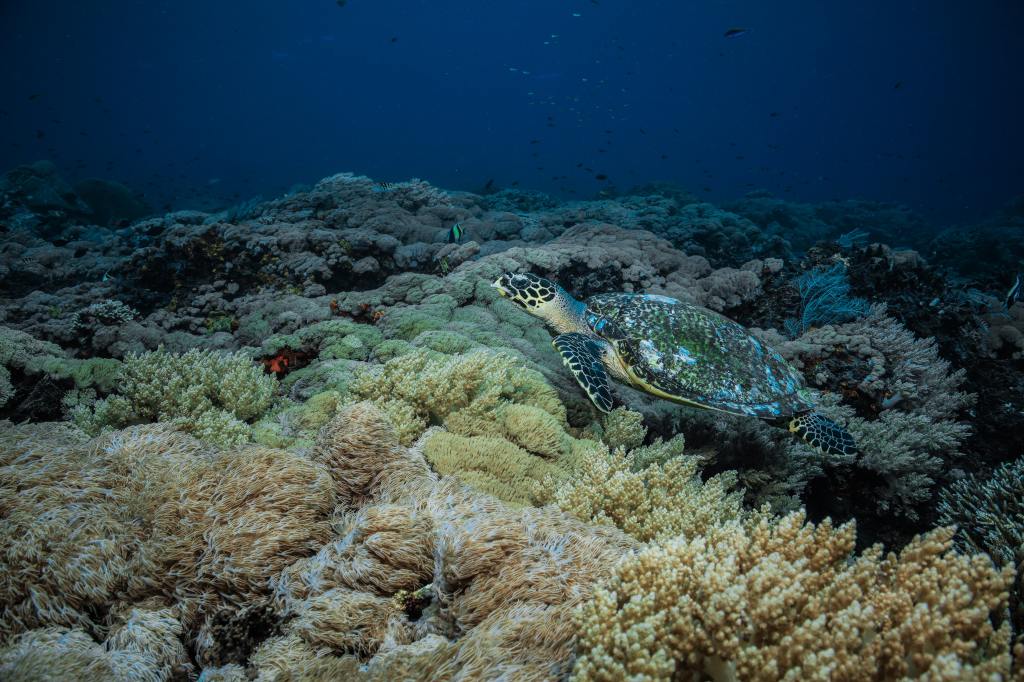
Sea turtles, along with many other marine creatures, are extremely sensitive to noise as most marine animals rely heavily on sound for survival. Sources of anthropogenic noise pollution include off-shore energy exploration (seismic surveys) and development, military sonar operations, construction and shipping activities. These noises have the potential to impact sea turtles and other marine organisms negatively in several ways including trauma to hearing (temporary or permanent), trauma to non-hearing tissue (barotraumas), alteration of behaviour, and the masking of biologically significant sounds. Animals such as whales and squid often beach themselves immediately following a tactical sonar exercise. Since sea turtles are highly migratory animals, they occupy different ecological niches throughout their lifetimes, each characterised by unique acoustic conditions, with shallow water environments noisier than pelagic environments.
While the effect of noise pollution on sea turtles has not been widely studied, there is evidence that females use sound, or low-frequency ‘grunts’, to communicate during nesting. Little is known about how sea turtles use their auditory environment but research on Green and Loggerhead sea turtles have determined that sea turtles are most sensitive to low-frequency sounds between 100 and 900 Hz with best sensitivity at the low tone region of about 250 Hz for Loggerheads and 400 Hz for Greens. As sea turtles get bigger, their frequency range narrows. These findings were based on a sound speaker suspended in the air while the turtles were submerged. However, a further experiment on Loggerheads in which a Navy J9 underwater speaker was used demonstrated that under these conditions, Loggerheads had a much larger frequency range of 50-1000 Hz. The morphology of the sea turtle ear shows that sea turtles are poor receptors for aerial sounds but well adapted to water conduction sounds.
A separate study examined the response of a Green and a Loggerhead sea turtle to the volume of air guns. The turtles showed an increase in swimming behaviour at 166 dB and became erratic and increasingly agitated at 175 dB. These levels are louder than the sound of close-range firecrackers. However, both of these turtles were caged for the experiment. Another study recorded uncaged juvenile Loggerheads’ avoidance behaviour at high intensity sounds and found that avoidance behaviour was initially observed at the sounds of air guns, used during geophysical seismic surveys, ranging from 100 to 1,000 Hz at 175-179 dB. However, after three separate exposures, the turtles stopped responding which may be attributed to the temporary or permanent loss of hearing. Few studies have looked at aural sensory hair cell damage in reptiles and it is unknown if sea turtles are able to regenerate hair cells, therefore it is difficult to predict the level of damage intense sounds can have on their hearing structures.
Research on freshwater turtles has shown that exposure to white noise can cause hearing loss or hearing sensitivity reduction that lasts from minutes to days. These findings are comparable to the effects of intense anthropogenic underwater noise pollution on sea turtles and is likely to cause sea turtles to experience the same, or worse, impacts of hearing loss or sensitivity reduction. This is detrimental as hearing is essential for communication, detecting prey and avoiding predators. Furthermore, these noises are a stressor and can result in the forced displacement or relocation of sea turtles and other marine species to a newer area as a survival mechanism. However, most animals fail to acclimate to their new environment, resulting in a loss of diversity in many regions. This can also result in a decline in food availability for many species, and potentially introduce new predator species.
Anthropogenic noises below the injury level have the potential to mask important sounds in the environment of sea turtles and other marine organisms. Masking sounds can interfere with the acquisition of prey or mate, the avoidance of predators and the identification of an appropriate nesting site. Further research is required to better understand sound masking in addition to the classification of sounds in relation to the responses of sea turtles in a controlled natural environment across sea turtle habitats and developmental stages.
Summary
- Sources of anthropogenic noise pollution include off-shore energy exploration (seismic surveys) and development, military sonar operations, construction and shipping activities.
- Anthropogenic noises impact sea turtles and other marine organisms negatively through trauma to hearing (temporary or permanent), trauma to non-hearing tissue (barotraumas), alteration of behaviour, and the masking of biologically significant sounds.
- These noises can also result in the forced displacement or relocation of sea turtles to a newer area. However, most animals fail to acclimate to their new environment, resulting in a loss of diversity in many regions, a decline in food availability, and potentially introduce new predator species.
- Hearing is essential for communication, detecting prey and avoiding predators.
- The morphology of the sea turtle ear shows that sea turtles are poor receptors for aerial sounds but well adapted to water conduction sounds.
- Research has determined that sea turtles are most sensitive to low-frequency sounds, and that their frequency range narrows as they get older.
- Avoidance behaviour was observed in juvenile Loggerhead sea turtles at high intensity sounds. However, after three separate exposures, the turtles stopped responding which may be attributed to the temporary or permanent loss of hearing.
Solution
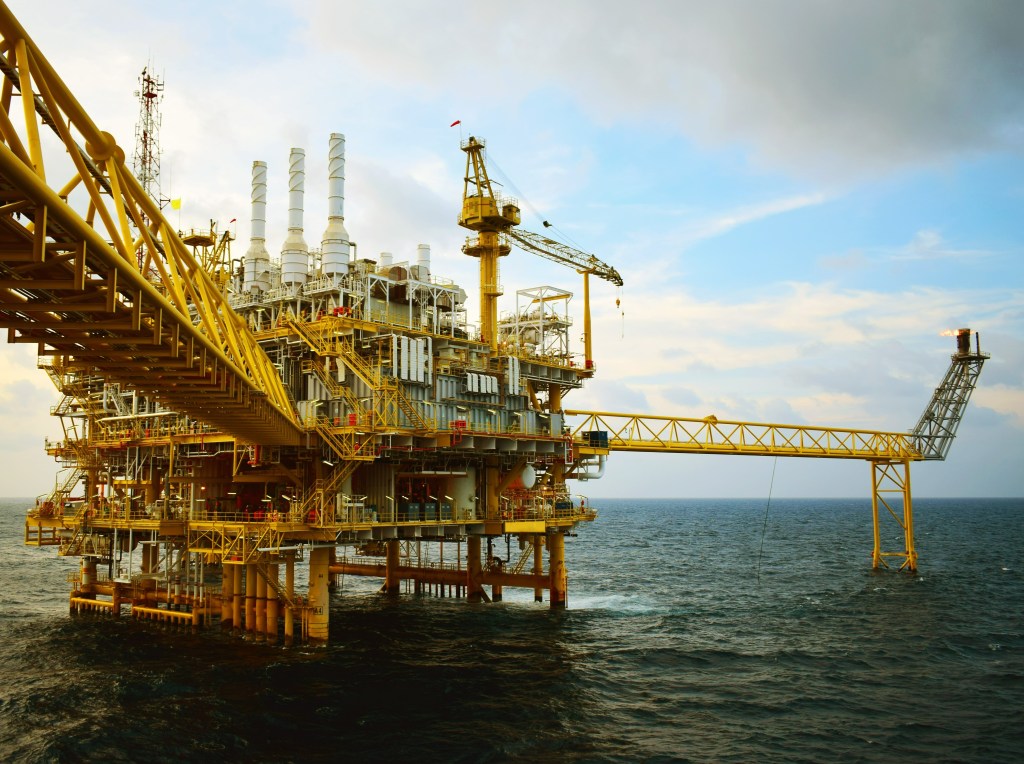
A significant amount of noise pollution comes from seismic surveys for oil and gas exploration as well as the subsequent drilling. This activity is linked to many other threats to sea turtles including Climate Change, Oil Spills and Plastic Pollution. Therefore, it’s a no brainer that the first and foremost solution to noise pollution from this activity is prevention, thus the cessation of offshore exploration and drilling and the use of fossil fuels. Fossil fuels are finite and we will run out of it eventually. Humans can live without fossil fuels. We survived without it in the past. We have become so reliant on materials and convenience that we have forgotten what life was like when less was more. A combination of renewable energy forms as well as reduced consumption and increased awareness of our energy footprint through all forms of consumption means that the use of fossil fuels and offshore drilling can be ceased imminently. Relearning to enjoy the simple things in life without constant connection to all things digital will also reduce our reliance on fossil fuels and other forms of energy, thus reducing the amount of noise pollution. Our general happiness will also greatly increase as we will be able to immerse ourselves in the healing sounds of nature again.
Where there is demand, there is supply. Ways the public can get involved in reducing energy demand is by buying organically and locally produced foods and products; and using more public transportation (where demand for public transportation increases, so does frequency and quality) and active forms of travel such as cycling, walking and running. Also ensure all electricity is turned off when not in use.
The increase in renewable energy also leads to the creation of jobs in energy conservation and renewables which will help swiftly shift the economy away from fossil fuels.
Reducing the noise coming from construction means a no-build buffer zone along the coast, and implemented as part of construction set-back policies and legislation. Currently, very little exists in terms of such policies and legislation, which means current regulative policies must change if there is any hope of saving the natural beaches and the tranquility that comes with them. Not only do no-build buffer zones prevent noise pollution from construction, but they also prevent noise pollution from human and business activities from the developments, such as music and parties, which may distract nesting females.
Military sonar operations is another significant source of noise pollution. Mitigation for sonar includes not operating in areas and during times where sonar-sensitive animals have been observed to occur, air and onboard observations for animals, having zones that are strictly non-operational, a slow ramp-up of intensity of signal to give animals a warning, large margins of safety exposure levels, and paid teams of veterans to investigate any strandings after sonar operations. However, the reason military sonar exists is because of the military; and the reason for military is for defence. An important but often forgotten goal that would significantly reduce the utilisation of the military and military sonar is to strive towards world peace. Humans have created a world where conflict is the norm and peace is never mentioned in political talks. How many times do politicians mention the word war, and how often do they say peace? If we as humans can achieve world peace and discuss any conflicts through verbal means like mature adults, we would have a significant reduction in our need to utilise the military and military sonar.
A considerable amount of noise pollution also comes from vessels. The first step to reducing the amount of noise coming from vessels is to reduce the number of vessels in the water at any one time. This can be implemented through zoning, with each zone defined by a maximum number of vessels and speed limits. Keeping speeds to 10 knots or less can reduce the amount of noise a vessel makes as well as reduce potential for injury. It is also important to allocate certain zones as vessel-free zones, particularly in areas with an abundance of wildlife. About 85% of shipping noise comes from propellers, arising from cavitation, a propeller design issue that sometimes causes a breakdown in water flow over the blades and can result in lost energy, fuel inefficiency and noise. Ship designs that reduce propeller noise could also help immensely, but they are costly and lack regulatory support for widespread adoption. Incentives, however, can encourage uptake of quiet technologies. For example, the Port of Vancouver awards vessels that reduce underwater noise with up to a 47% discount in harbour fees. In 2017, Danish shipping company Maersk spent more than $100 million to save fuel by retrofitting vessels’ hulls and installing more efficient propellers on 11 of its container ships, of which five underwent acoustical testing. The results showed that the newly fitted propellers had a noise reduction of 6 to 8 dB, a 75% reduction in acoustic energy.
Another practice used to mitigate noise pollution is by dampening pile drivers at offshore wind farms using bubble curtains. Perforated pipes encircle the pile driver, blowing a wall of air bubbles that absorb and refract the noise, reducing it by as much as 15 dB, a 95% reduction in acoustic energy.
Education about the impacts anthropogenic noise pollution has on sea turtles and other marine wildlife is vital to raising awareness so that people can voice their concerns to governments and companies causing the noise.
The amount of activity that occurs causing noise pollution is also highly dependent on human population. As human population eventually declines, the amount of noise polluting activities, including the need for shipping ports, decreases and can be more easily managed.
Summary
- Cessation of offshore exploration and drilling and the use of fossil fuels must be imminent.
- An increase in renewable energy leads to the creation of jobs in energy conservation and renewables which will help swiftly shift the economy away from fossil fuels.
- Buy organically and locally produced foods and products.
- Use more public transportation (where demand for public transportation increases, so does frequency and quality) and active forms of travel such as cycling, walking and running.
- Ensure all electricity is turned off when not in use.
- Establish a no-build buffer zone of the coast, and implemented as part of construction set-back policies and legislation around the world, to eliminate noise from coastal construction and and subsequent activities.
- Sonar activities should be prohibited during times where sonar-sensitive animals have been observed to occur; air and onboard observations for animals; having zones that are strictly non-operational; a slow ramp-up of intensity of signal to give animals a warning; large margins of safety exposure levels; and paid teams of veterans to investigate any strandings after sonar operations.
- Striving towards world peace would mean a significant reduction in our need to utilise the military and military sonar.
- Reducing the number of vessels in the water at any one time through zoning, with each zone defined by a maximum number of vessels and speed limits, would reduce the amount of noise generated by these vessels.
- Ship designs that reduce propeller noise could also help immensely.
- Dampen pile drivers at offshore wind farms using bubble curtains to reduce the amount of noise generated.
- Educate the public about the impacts anthropogenic noise pollution has on sea turtles and other marine wildlife to raise awareness.
- Reduced consumption habits and increased exposure to the sounds of nature will greatly increase our general happiness.
- As human population eventually declines, the amount of noise polluting activities, including the need for shipping ports, decreases and can be more easily managed.
References
Convention on Biological Diversity: Sea Turtle Hearing and Sensitivity to Acoustic Impacts
Holtz, B., Stewart, K. R. & Piniak, W. E. D. Influence of Environmental and Anthropogenic Acoustic Cues in Sea-Finding of Hatchling Leatherback Sea Turtles. PLoSONE 16(7) (2021).
Ocean Conservancy: New Research on Noise Pollution
Papale, E., Prakash, S., Singh, S. et al. Soundscape of Green Turtle Foraging Habitats in Fiji, South Pacific. PLoS ONE 15(8) (2020).
Piniak, W. E. D., Mann, D. A., Harms, C. A. et al. Hearing in the Juvenile Green Sea Turtle (Chelonia mydas): A Comparison of Underwater and Aerial Hearing Using Auditory Evoked Potentials. PLoS ONE 11(10) (2016).
Ridgway, S. H., Wever, E. G., McCormick, J. G. et al. Hearing in the Giant Sea Turtle, Chelonia mydas. Proceedings of the National Academy of Sciences 64, 884-890 (1969).
Sea Turtle: Observations of Marine Turtles in Relation to Seismic Airgun Sound off Angola
Scientific American: A Few Fixes Could Cut Noise Pollution That Hurts Ocean Animals
Wever, E. G. & Vernon, J. A. The Sensitivity of the Turtle’s Ear as Shown by its Electrical Potentials. Proceedings of the National Academy of Sciences 42, 213-220 (1956).
Woods Hole Oceanographic Institution: Effects of Noise on Marine Life
 Koru Honu