Common Name
Flatback Sea Turtle
Scientific Name
Natator depressus
Description
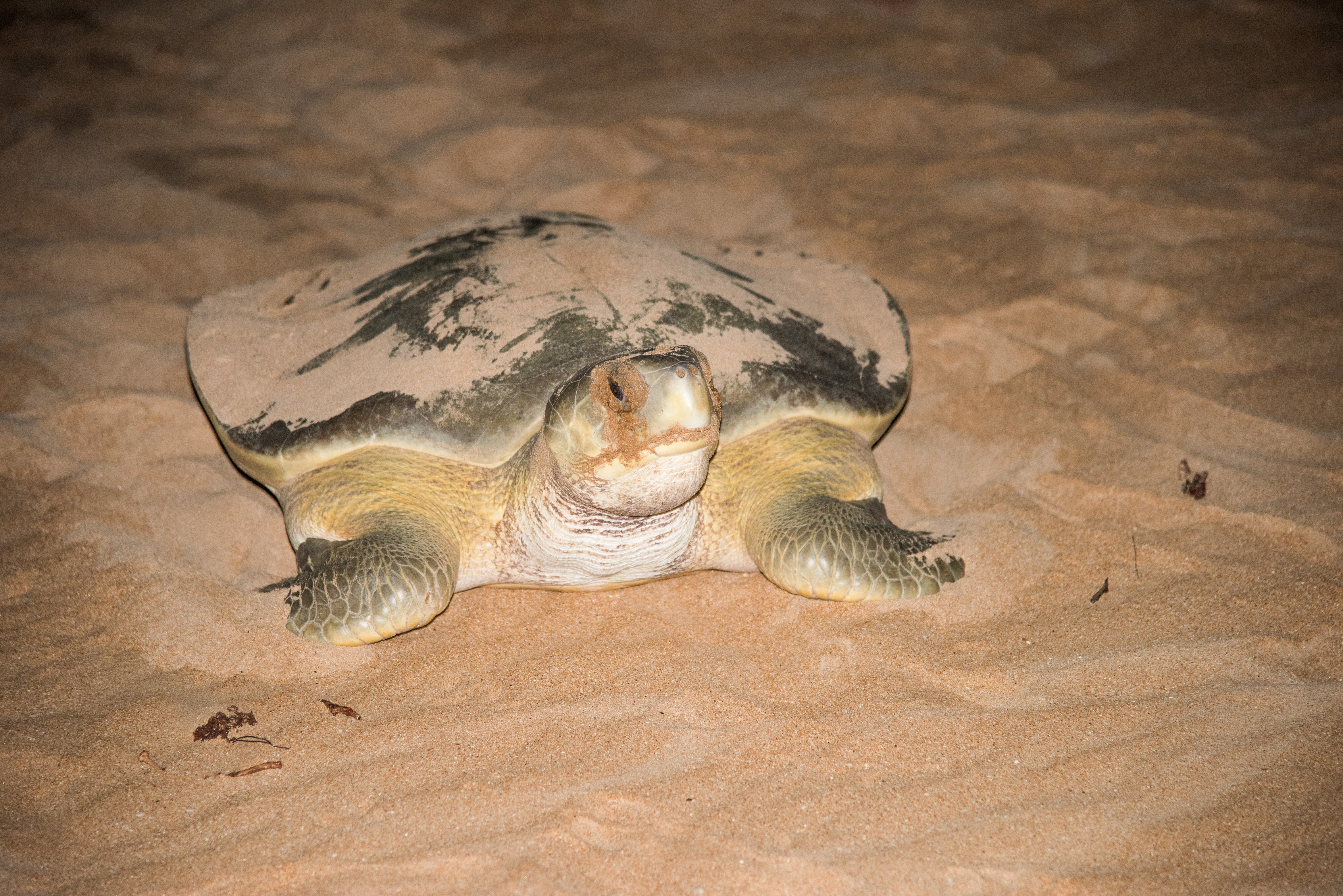
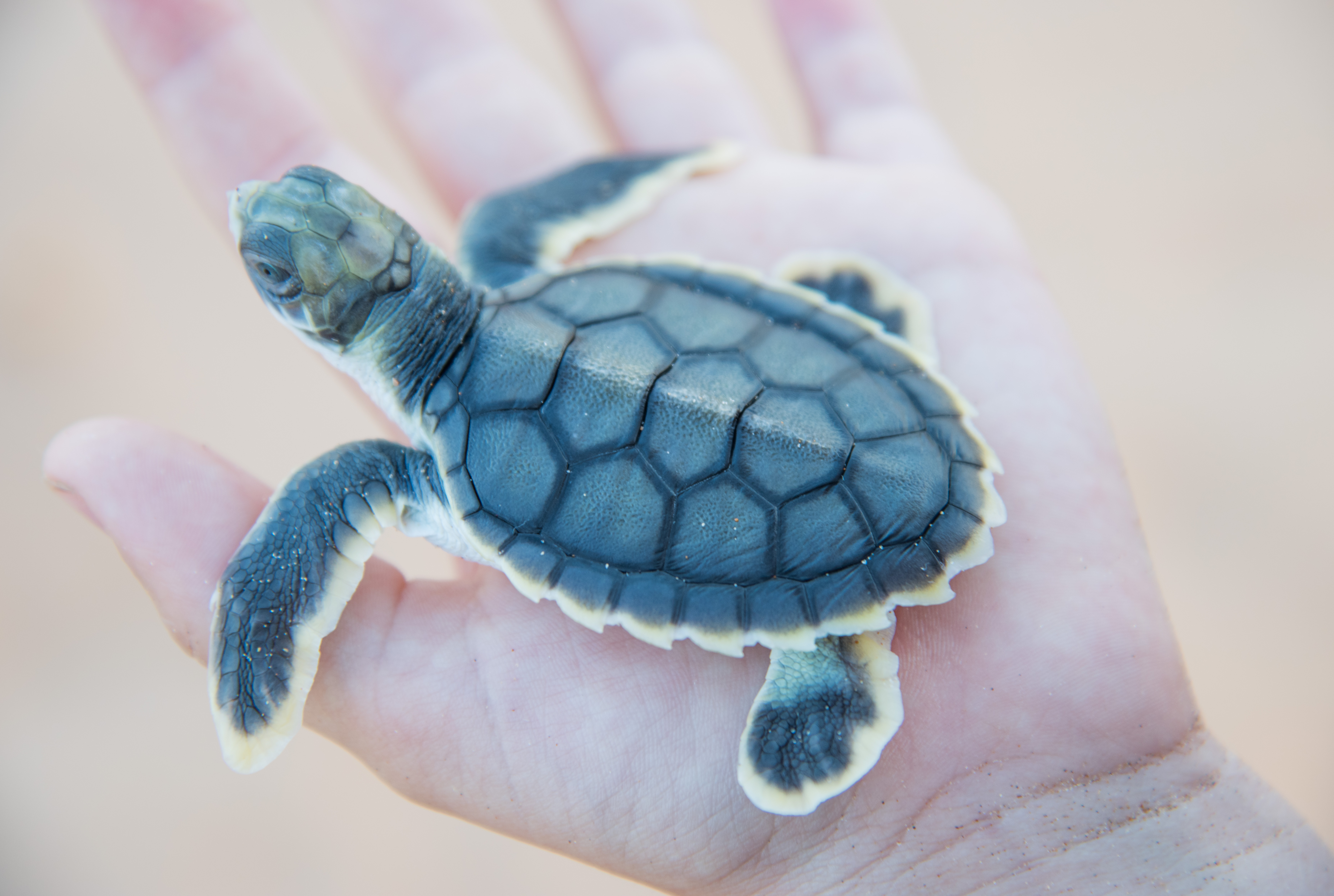
Flatbacks are named after their oval, or round, and very flat carapace. The carapace is bony without ridges and has large, non-overlapping, scutes present with only 4 lateral scutes. The edge of the carapace is folded outward and covered by thin, non-overlapping waxy scutes. The carapace is olive-grey with pale brown/yellow tones on the margins and the flippers are creamy white. The scutes of hatchlings form a unique dark-grey reticulate pattern, and the centre of each scute is olive coloured. Flatbacks have a single pair of prefrontal scales (scales in front of its eyes) and their flippers only have 1 claw.
Size
Adults measure up to 1 metre in carapace length.
Weight
Adults weigh an average of 90 kilograms.
Lifespan
Flatbacks are estimated to live up to 100 years.
Diet
Sea cucumbers, jellyfish, molluscs, prawns, shrimp, crabs, bryozoans, other invertebrates, fish, soft corals and seaweed.
Range
The Flatback has the smallest geographic range of the sea turtle species as they do not undertake long, open ocean migrations. Flatbacks are found only in the waters around Northern Australia, Southern Indonesia and Southern Papua New Guinea.
Habitat
Flatbacks prefer turbid in-shore waters, bays, coastal coral reefs and grassy shallows. They are usually found in waters less than 60 metres in depth. Hatchlings appear to remain in and prefer silty, nearshore waters instead of dispersing out into the open ocean. Adults primarily inhabit coastal waters, with the exception of venturing to Papua New Guinea to forage.
Nesting
- Reproduction Interval: 2-4 years
- Clutches Per Season: 3-4 clutches
- Clutch Size: 50 eggs (fewer than other sea turtle species but eggs and hatchlings are comparatively larger)
- Nest Incubation Period: 55 days
- Sexual Maturity: 7-50 years
Nesting only occurs along the northern coast of Australia with the largest concentration of females nesting on Crab Island in the Northeastern Gulf of Carpentaria in Queensland. Nesting can occur during any month of the year, though may peak in winter.
Population Estimates
Between 20,000 and 21,000 nesting females.
Status
International: Listed as Data Deficient by the International Union for Conservation of Nature and Natural Resources. Was previously listed as Vulnerable. Change in classification does not imply species recovery, it just indicates a lack of recent research into their abundance and distribution.
Australia: Listed as Vulnerable under the Australian Environment Protection and Biodiversity Conservation Act 1999.
Interesting Facts
- Due to the presence of saltwater crocodiles in and around their habitats, no underwater photos of Flatbacks have ever been recorded.
- Despite its small range and non-migratory behaviour, the Flatback is the least studied of all sea turtles, likely due to the remoteness of much of its habitat.
- The unique physiology of the Flatback allows it to stay underwater for longer periods than other sea turtle species.
- Adult Flatbacks leave symmetrical tracks when they crawl up onto the beach. These are created when the turtle moves both front flippers forward simultaneously.
- Flatbacks were thought to be a type of Green Sea Turtle up until 1988 when they were classified as a separate species.
References
Australian Government – DAWE: Flatback Sea Turtle
Chatto, R. A Preliminary Overview of the Locations of Marine Turtle Nesting in the Northern Territory in Marine Turtle Conservation and Management in Northern Australia (eds. Kennett, R., Webb, A., Duff, G., Guinea, M. & Hill, G.). 33-40 (Northern Territory University, 1998).
IUCN Red List: Flatback Sea Turtle
Northern Territory Government: Flatback Sea Turtle
Sea Turtle Conservancy: Flatback Sea Turtle
See Turtles: Flatback Sea Turtle
SWOT: Flatback Sea Turtle
Upwell: Flatback Sea Turtle
 Koru Honu