
During breeding season, sea turtles return to their natal beaches to nest (see Migration: Orientation & Navigation). Sea turtle nesting beaches around the world have been substantially altered, even destroyed, through anthropogenic development and urbanisation. This includes sand mining, dredging of ship channels, and the construction of ports, roads and buildings near nesting beaches. Not only do these developments and their associated activities degrade and destroy nesting beaches, but the implementation of coastal armouring such as vertical seawalls and sloping rock revetments to protect developments from erosion threatens the sea turtles’ reproductive cycle by preventing them from reaching the upper portion of the beach where they nest. This forces turtles to nest in less than optimal nesting areas lower on the beach where their nests are more susceptible to wave action and more likely to be covered with water, thus significantly reducing chances of survival. Research has shown that Green Sea Turtles are most affected by coastal armouring due to their typical nest site selection favouring the upper portions of the beach. Fewer turtles come ashore to beaches that have coastal armouring, and those that do often return to the ocean without nesting, known as a false crawl. When a female cannot find an ideal nesting spot, this will result in her depositing her eggs in less than ideal locations or even in the ocean, both with very low chances of survival for hatchlings.
The early stages of coastal development wipe out dunes and vegetation. Vegetation, such as beach grass and sea oats, is vital for the stabilisation of sand as they help accumulate sand and prevent erosion. These areas are prime nesting locations for sea turtles. When beach vegetation is lost as a result of anthropogenic development, these beaches become prone to erosion and sea turtles are subsequently forced to lay their eggs closer to the shoreline where nests are more susceptible to drowning from high waves and washing out to sea.
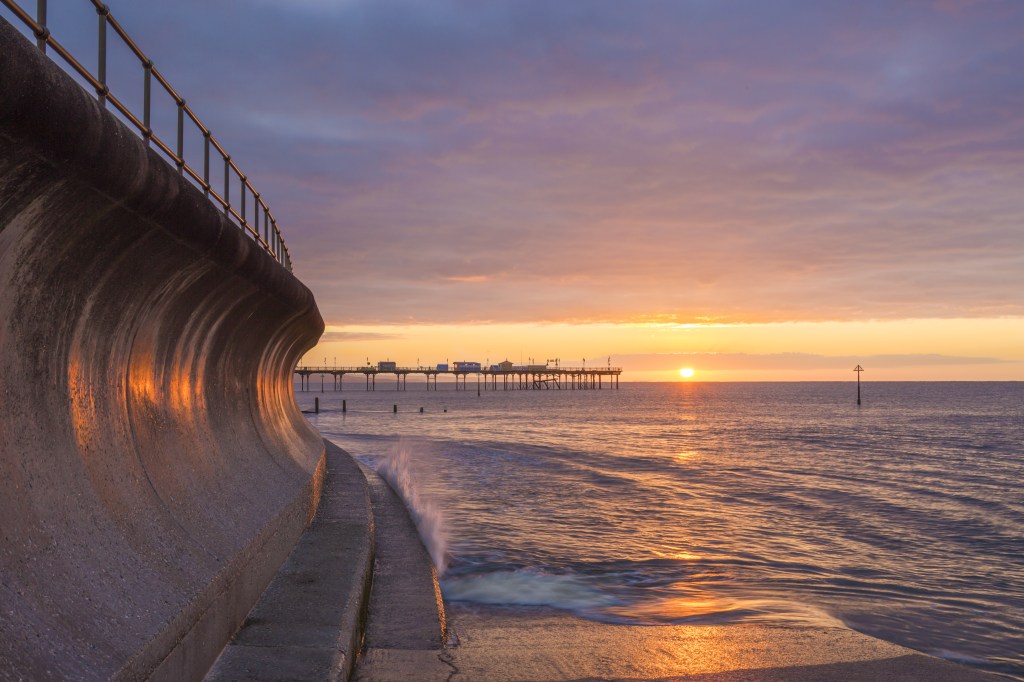
The purpose of coastal armouring is to prevent erosion to human developments. This interferes with the natural erosional cycle of the beach by preventing beaches from naturally migrating inland or recovering naturally after storm events. Coastal armouring results in sand loss as they lock up sand on the landward side that would normally be deposited onto an eroded beach, thus preventing natural replenishment of the eroded beach. This removes all nesting opportunities for sea turtles and potentially exposing already laid eggs and washing them out to sea. Ironically, coastal armouring eventually erodes away rather than migrate landward as beaches always have with rising sea levels. Research from northeast Brazil has shown that sea turtles prefer nesting on wave-dominated beaches, where the coastal reefs are absent and there is a well-developed natural backshore, mainly due to the lower urban settlement in these areas.
Because coastal armouring prevents natural replenishment of the eroded beach, one way to address this is through beach nourishment, which is the artificial replenishment of sand. Beach nourishment can also be implemented in place of armouring. Nourishment consists of pumping sand from a source which is then shipped and/or trucked to a beach and then deposited. While nourishment is preferred to armouring, it can negatively impact sea turtles if the sand is too compact for turtles to nest or if the sand imported is drastically different from native beach sediments, thereby potentially affecting nest site selection, digging behaviour, incubation temperature (resulting in altered and unnatural sex ratios) and the moisture content of nests. If nourishment is allowed to proceed during nesting season, nests can also be buried far beneath the surface or run over by heavy machinery.
Dredging also negatively impacts sea turtles and their near-shore habitats. Hopper dredges that suck up sand from off-shore destroy near-shore habitats and have been reported to incidentally capture and kill many sea turtles and other marine organisms. Dredging of ship canals not only results in direct sand loss, but requires jetties that block sand flow, thus starving downdrift beaches of sand. The noise produced from dredging can also cause distress to sea turtles (see Noise Pollution). Furthermore, if the sand is too fine or silty it can wash back out and cover near shore rocky bottom habitats that are used by many marine species including sea turtles.
Increased coastal developments also results in increased pollution to sea turtle habitats from run-off, wastewater discharge and litter on the beach and in the ocean (see Chemical Pollution and Plastic Pollution). Light pollution is also a major threat of coastal development on nesting females and hatchlings (see Light Pollution).
Summary
- Anthropogenic coastal developments include sand mining, dredging of ship channels, and the construction of ports, roads and buildings near nesting beaches.
- The early stages of coastal development wipe out dunes and vegetation that are vital for the stabilisation of sand and are also prime nesting locations for sea turtles.
- Coastal armouring, built to protect developments from erosion, prevents sea turtles from reaching the upper portion of the beach where they nest, forcing turtles to return to the ocean (false crawl) or nest in lower areas on the beach where nests are susceptible to wave action and are more likely to be covered with water.
- Coastal armouring results in sand loss as they lock up sand on the landward side that would normally be deposited onto an eroded beach, thus preventing natural replenishment of the eroded beach and removing nesting opportunities for sea turtles while potentially exposing existing nests.
- Beach nourishment can negatively impact sea turtles if the sand is too compact for turtles to nest or if the sand imported is drastically different from native beach sediments. Beach nourishment can also cause nests to be buried far beneath the surface or run over by heavy machinery.
- Hopper dredges that suck up sand from off-shore destroy near-shore habitats and have been reported to incidentally capture and kill many sea turtles and other marine organisms.
- Dredging of ship canals results in direct sand loss and requires jetties that block sand flow, thus starving downdrift beaches of sand.
- If the sand is too fine or silty, it can wash back out and cover near shore rocky bottom habitats.
- The noise produced from dredging can also cause distress to sea turtles (see Noise Pollution).
- Coastal developments also increases pollution from run-off, wastewater discharge and litter, as well as light pollution (see Chemical Pollution, Plastic Pollution and Light Pollution, respectively).
Solution
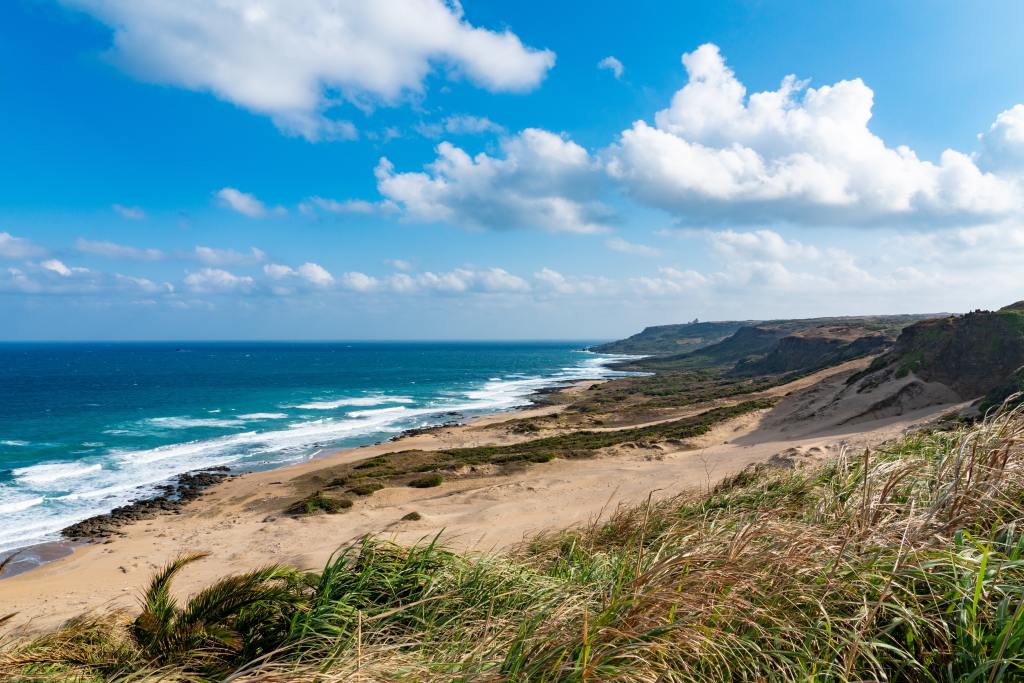
The easiest and most straightforward solution is prevention, which in terms of coastal developments means a no-build buffer zone along the coast, and implemented as part of construction set-back policies and legislation around the world. Currently, very little exists in terms of such policies and legislation, which means current regulative policies must change if there is any hope of saving the natural beaches.
Where buildings currently exist, these can be refurbished to ensure noise and lighting meet coastal requirements. Eco-tourism programs can also be implemented in these existing developments. An even better option would be to demolish existing buildings and return the land to the natural inhabitants and ecosystems of the coast.
Beachfront armouring should only be used as a last resort to protect upland structures. Sand replenishment, elevating structures on pilings, and building farther landward can help alleviate the need for sea walls. When sea walls are constructed they should be located as far landward and off the active nesting beach as possible.
Rising sea levels as a result of climate change is also a major cause of coastal erosion, another driver for the implementation of coastal armouring. For information on the solutions of climate change, see Climate Change.
In addition, dune and beach vegetation must be protected as these are vital for the stabilisation of sand as they help accumulate sand and prevent erosion. They are also prime nesting locations for sea turtles. These zones must be inaccessible and secure, with signage informing the public and providing them with educational information on local beach and dune system dynamics and why these areas are blocked off, thus raising awareness. Furthermore, the public should be given opportunities to join organisations to help replant native vegetation on dunes to refortify the beach.
Education about the impacts coastal developments have on sea turtles and other animals and vegetation is vital to ensure people are aware of their impacts on the coasts and allows them to consciously make the decision to not live or provide business to developments along the coastline, and to do their part to respect nature and take care of the natural inhabitants of the beach.
Coastal development is also highly dependent on human population. As human population eventually declines, the amount of development along the coast, as well as the need for shipping ports, is likely to also decline be more easily managed. Even better when there is no demand is that buildings along the coast can be demolished and land returned to nature.
For information on the solutions of light pollution, see Light Pollution.
Summary
- Establish a no-build buffer zone of the coast, and implemented as part of construction set-back policies and legislation around the world.
- Existing developments can be refurbished to ensure noise and lighting meet coastal requirements.
- Eco-tourism programs can also be implemented in these existing developments.
- Beachfront armouring should only be used as a last resort to protect upland structures.
- Dune and beach vegetation must be protected and signage implemented with educational information on local beach and dune system dynamics.
- Public should be given opportunities to join organisations to help replant native vegetation on dunes to refortify the beach.
- Educate the public about the impacts coastal developments have on sea turtles and other animals and vegetation.
- As human population eventually declines, the amount of development along the coast, as well as the need for shipping ports, is likely to also decline and be more easily managed. Eventually buildings along the coast can be demolished and land returned to nature.
- For information on the solutions related to climate change and light pollution, see Climate Change and Light Pollution, respectively.
References
Fuentes, M. M. P. B., Allstadt, A. J., Ceriani, S. A. et al. Potential Adaptability of Marine Turtles to Climate Change May be Hindered by Coastal Development in the USA. Regional Environmental Change 20(3) (2020).
Fuentes, M. M. P. B., Gredzens, C., Bateman, B. L. et al. Conservation Hotspots for Marine Turtle Nesting in the United States Based on Soastal Development. Ecological Applications 26(8), 2708-2719 (2016).
Helping Sea Turtles: Funded Project Details
Hirsch, S. E., Toonder, M., Reilly, J. D., et al. Responses of Three Nesting Sea Turtle Species to Hard-Armoring Structures. Frontiers in Marine Science 9 (2022).
K-12 Sea Turtles: Coastal Development
Lopez, G. G., Saliés. E. C., Lara, P. H. et al. Coastal Development at Sea Turtles Nesting Ground: Efforts to Establish a Tool for Supporting Conservation and Coastal Management in Northeastern Brazil. Ocean & Coastal Management 116, 270-276 (2015).
López-Mendilaharsu, M., Giffoni, B. B., Monteiro, D. et al. Multiple Threats Analysis for Loggerhead Sea Turtles in the Southwest Atlantic Ocean. Endangered Species Research 41, 183-196 (2020).
Sea Turtle Camp: Coastal Development
Sea Turtle Conservancy: Threats from Coastal Armoring
Sea Turtle Conservancy: Threats from Beach Erosion
See Turtles: Coastal Development & Sea Turtles
Sella, K. N. & Fuentes, M. M. P. B. Exposure of Marine Turtle Nesting Grounds to Coastal Modifications: Implications for Management. Ocean & Coastal Management 169, 182-190 (2019).
Sella, K. N., Sicius, L. & Fuentes, M. M. P. B. Using Expert Elicitation to Determine the Relative Impact of Coastal Modifications on Marine Turtle Nesting Grounds. Coastal Management 47(5), 492-506 (2019).
Siqueira-Silva, I. S., Arantes, M. O., Hackradt, C. W. & Schiavetti, A. Environmental and Anthropogenic Factors Affecting Nesting Site Selection by Sea Turtles. Marine Environmental Research 162(4) (2020).
Siqueira-Silva, I. S., Gonçalves, R. M., Queiroz, H. et al. Understanding the Coastal Erosion Vulnerability Influence Over Sea Turtle (Eretmochelys imbricata) nesting in Northeast of Brazil. Regional Studies in Marine Science 47 (2021).
SWOT: Threat Series – Coastal Development
 Koru Honu